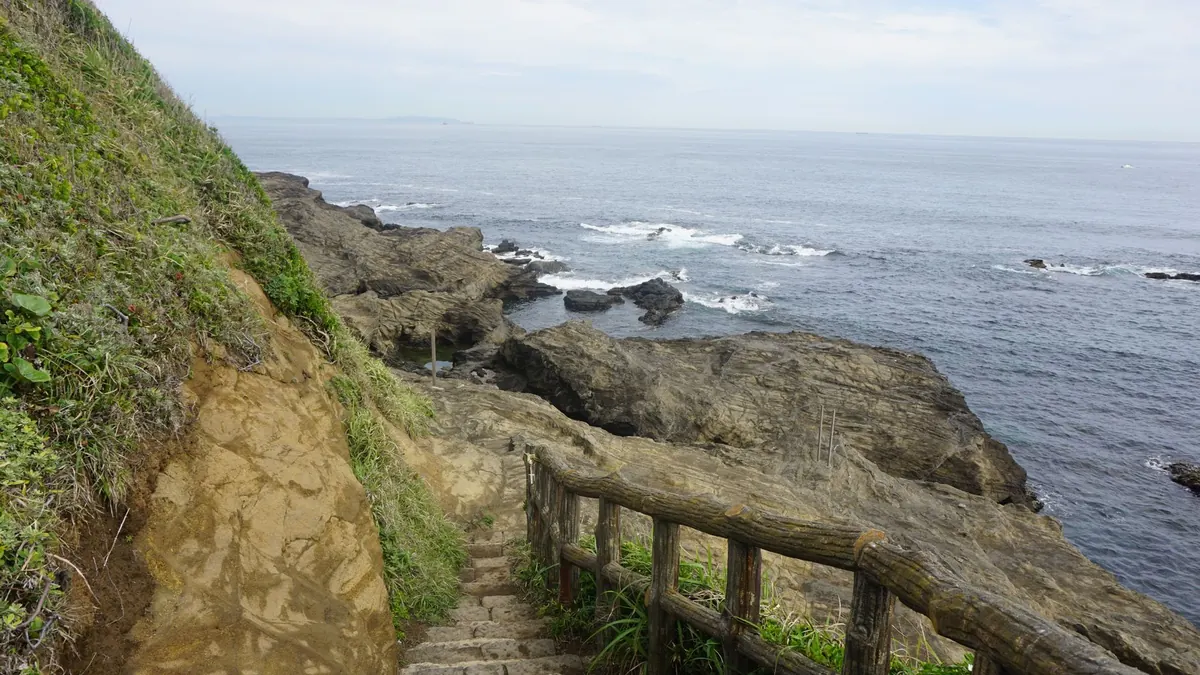
Some of the best swimming on an island is at the end of a path that never appears on the road signs. A twenty-minute walk past the last villa, down a set of stone steps, around a headland, and there it is: a strip of pebbles, a slab of flat rock, water so clear it looks shallow when it isn't. Reaching these places on foot is one of the quiet pleasures of coastal travel. It also rewards a bit of preparation. Most of what goes wrong on a coastal walk can be avoided with a tide table, decent shoes and an honest look at the clock.
The Tide Sets Your Schedule, Not Your Mood
On rocky coasts, the tide is not background information. It is the thing that decides whether your route exists. Beaches that are forty metres wide at low water can be a wall of wet boulders by mid-afternoon, and a ledge you crossed easily at ten in the morning may be chest-deep at four. Always plan a cove walk around a falling tide and aim to be back on high ground well before it turns.
Get a local tide table before you go — harbour offices, chandlers, ferry ticket booths and many small hotels still post one on the wall. If you can, walk on a neap tide rather than a spring tide, when the range between high and low is smaller and the window of safe passage is longer. On spring tides the difference can be dramatic, and the water moves faster across flat rock.
Two specific habits help. First, note the time of low water and work backwards: if you want an hour at the cove and twenty-five minutes each way, leave at least two and a half hours before the tide turns. Second, look behind you every so often on the outward leg. The coast looks entirely different from the other direction, and the notch in the cliff you scrambled down may be invisible from the beach.
Scout the Route Before Your Feet Do
Satellite imagery has made this much easier than it used to be, but it flatters rough ground. A path that appears as a neat line on a screen can be a loose gully of scree in reality. Use the map to answer three questions: how steep is the descent, is there any shade, and where are the exits if the cove is cut off?
What to look for on a map
- Contour spacing: tight lines mean steep ground, often with loose footing near the sea.
- Gullies and ravines: these are usually the steepest and most eroded sections.
- Alternative exits: a second path, a set of steps or an old mule track inland.
- Land ownership: some coves sit below private terraces or farmland, and the access path may not be public.
Then ask someone. A bar owner, a bus driver, a fisherman mending nets — anyone who lives with that coastline will tell you in thirty seconds what the map cannot, such as a gate that is now locked or a stretch of path that collapsed last winter. Locals are also usually honest about whether a cove is worth the walk, which saves you an hour of scrambling for a beach of building rubble.
Footwear: The One Place Not to Improvise
Coastal rock is the most deceptive surface in walking. Dry granite and limestone offer excellent grip; the same rock with a film of salt water is like ice. Add wet seaweed on a sloping slab and you have the classic coastal fall.
Wear closed shoes with a proper tread and a reasonably stiff sole. Trail runners or light walking shoes suit most marked paths and short scrambles; if the route involves boulders or steep gullies, choose something with more ankle support. Flip-flops and smooth-soled sandals belong in your bag for the beach itself, not on the descent. If you plan to swim and the walk back is long, consider carrying a second pair of dry socks — wet feet soften quickly and blisters on a rocky return are miserable.
Test your footing before you commit your weight. A flat, downward palm on a rock tells you more than a tentative toe. On descents, keep your hands free and your centre of gravity low; scrambling is often safer on four points of contact than on two.
Timing the Walk, Not Just the Water
The tide is only half the calculation. On islands, the middle of the day can be brutally exposed, with no shade between the path and the water and rock that radiates heat. Early morning and late afternoon are kinder, and the light is better. If you are walking in summer, aim to be off the exposed sections before the strongest sun and carry more water than feels necessary.
Check the return leg with the same care as the outward one. Is there a last bus, a ferry, a gate that closes? Will you be walking back in the dark? A small headlamp weighs almost nothing and turns a late return from a problem into an inconvenience. Tell someone where you are going and when you expect to be back, and give yourself a hard turnaround time written down rather than estimated in your head.
If you have knee trouble, a heart condition, or you are walking with someone who tires easily, take a realistic view of the return climb — the walk back is nearly always the harder half. Where it matters, get advice from a doctor before committing to a rocky two-hour round trip.
What to Carry on a Half-Day Cove Walk
You do not need much, but the few things you do need should be reliable. A compact kit for a three to four hour walk looks roughly like this:
- Water — more than you think, especially in heat, and a spare bottle left in the car.
- An offline map or downloaded map area, plus a charged phone in a waterproof bag.
- Sun protection: hat, high-factor cream, lightweight long sleeves.
- A thin windproof layer; sea breezes cool quickly once you stop moving.
- Food that survives being squashed, plus something salty.
- Small first-aid kit with blister plasters and a bandage.
- Headlamp or torch, a whistle, and a plastic bag for your own rubbish.
- Water shoes or sandals for the cove, and a dry bag for anything that must stay dry.
Turning Around Is a Skill
Most coastal incidents are not dramatic. They are a slow accumulation: the path is rougher than expected, the water is higher than expected, the group is slower than expected. The useful response is to make a decision early, while turning back still feels like a choice rather than a defeat.
Set simple rules before you start. If the tide reaches a particular ledge, we leave. If the path requires hands on rock and we are not comfortable, we stop. If it is an hour later than planned and we have not reached the cove, we turn. Nobody enjoys being the person who calls it, so agree the rules together at the car park, when everyone is still cheerful and dry.
Arriving at the cove is optional. Getting back to the trailhead with dry boots and good humour is the actual objective.
The Five-Minute Check Before You Leave
Run through the same short sequence every time, and the habit will carry you through the days when you are tired or distracted.
- Low tide time confirmed, and your turnaround time set an hour or more before it.
- Return transport and daylight checked.
- Route looked at on a map, with at least one alternative exit noted.
- Shoes on, laces tied, sandals in the bag.
- Water, phone, layer, torch, first-aid kit — hands on each one.
- Someone knows where you are going and when to expect you.
Then go. Walk slowly on the descent, stop at the headland to look at where you have come from, and swim in water you have earned. The cove will still be there tomorrow; the point is to be there too, unhurried and in one piece.
Photo: Bram Goudeseune / Pexels