Every island has one night a year when the square stops belonging to visitors. The boats are still moored, the restaurants are still serving, but the evening has a different owner: the confraternity carrying the statue, the fishermen's committee hauling a boat through the piazza, the family that has cooked the same dish for four generations. Visitors are welcome at almost all of these festivals. They are simply not the point of them.
That distinction is the whole of festival etiquette, and it is easier to get right than most travellers expect. What follows are the mistakes that actually stand out — the ones locals notice, remember, and occasionally still talk about long after the last firework.
Dress for the Festival, Not the Beach
The most common error is not a rude one. It is a bikini top under a sheer shirt at eight in the evening, or sandy flip-flops on cobbles in a crowd of two thousand.
Start with the building. If any part of the celebration happens in a church — and on most Italian islands, at least the Mass does — cover your shoulders and knees. A light scarf or a long-sleeved shirt at the bottom of a day bag solves this in ten seconds. Bare shoulders are usually tolerated in the doorway and clearly not in the pews.
Then look at the street. Even a wholly secular festival — a grape harvest, a rowing race, a fireworks night — is an occasion. Islanders dress up: pressed shirts, good shoes, hair done properly. Nobody will turn you away in shorts. You will just look like you wandered in from the lido, and by the second hour you will feel it.
- Shoes for stone. Cobbles, dark stairways, and a slow procession that covers two kilometres. Flat, closed, already broken in.
- Fabric for sparks. Near bonfires and firework fallout, loose synthetics and floaty scarves are a poor choice. Cotton, denim, hair tied back.
- A layer for later. Island evenings cool down fast, even in August, especially near water.
- Something to cover up with. The scarf that gets you into the church also keeps the wind off at midnight.
One more practical note: festival whites. If a town has asked people to wear white for a procession, that is not a suggestion. Wear it, or watch from the side.
Ask Before You Photograph
Nobody expects a permission form. A raised camera, an inquiring look and the word Posso? cover almost every situation. Most people nod, some pose, a few wave you off — and that wave ends the matter.
The shots that cause friction are usually these:
- Flash in a procession or a church. It breaks the atmosphere, and in a religious setting it can be genuinely offensive.
- Standing in the road for the angle. A photographer in the middle of the route forces people carrying something heavy to break step. Step to the wall instead.
- Children, and anyone praying, crying or visibly grieving. Many festivals contain a memorial element. That part is not content.
- Drones. Unless you can see others flying and have asked the organisers, leave it packed. Crowds, overhead cables and narrow streets make them unwelcome for sound reasons.
- The inside of a house, even when the door stands open and the table looks beautiful.
If somebody turns away, covers their face or steps back, lower the camera and smile. No explanation is required and none will be believed if you offer one. And if you intend to publish or sell the images, ask in person afterwards — and be ready for an honest no.
Join In, but Follow the Lead
Island festivals are participatory, and this is the good news. The dance circle opens outward. A stranger hands you a plate. A boat crew is one rower short.
Watch a single round before you join anything. Every dance has a rhythm and a direction, and both become obvious after thirty seconds of looking. Step in at the edge rather than through the middle. If someone takes your hand and pulls you in, go — that is an invitation, and declining it with a grimace is worse than dancing badly.
Where to hold back:
- Formations. Walking alongside a procession as a respectful observer is normally fine. Carrying the statue, holding the canopy ropes or slotting into the line is not, unless you are asked — and on some islands those places belong to particular families by tradition.
- The cooking. Offer to help and expect a polite refusal the first time. Offer again, then accept whatever small job you are given without reorganising it.
- Alcohol. Locals may drink more than you would expect and still be up at six for the procession. Visitors who treat the free wine as the main event are the ones the organising committee remembers in January.
- Children's parts. The kids carrying candles have rehearsed for weeks. Do not step into the gap for a photo of your own child; you will be in everyone's way, including theirs.
A Procession Is Its Own Room
Something changes when the statue or the banner comes out of the church. Voices drop. People put their phones away — or should. The mood may be solemn for a hundred metres and joyful twenty minutes later, and the crowd will tell you which is which if you watch them rather than your screen.
Nobody minds a visitor who watches closely and asks politely. What people remember is the person who walked through the middle of the procession to reach the bar.
Practical rules that hold almost everywhere: stand aside rather than on the route, and never step on flower petals or sawdust patterns laid out for the occasion. Don't touch the statue, the reliquary or the float, and don't lift a child over a barrier for a better view. Keep calls and video commentary for later. If the crowd kneels, goes silent or starts singing, follow their lead rather than continuing your conversation.
Inside the church, sit or stand towards the back unless you are taking part. Arrive before the service begins rather than pushing in halfway through, and leave after the final blessing, not during it.
Small Courtesies That Carry Weight
Learn four words of the local language and use them: buonasera, grazie, permesso, salute. Nobody expects fluency. Everybody notices an attempt.
Then a few quieter things. Carry cash for the small stalls, because the card reader is often a rumour. Buy something from the people who live there rather than only from the van that followed the tour buses. Ask prices rather than assuming, and don't haggle over a two-euro paper cone of nuts at a church fundraiser.
Timing matters more than visitors expect. The printed start time is a target, not a contract; things begin when the square fills and the band arrives. Arrive early, stay later than you planned, and know when the last ferry or the last bus actually leaves — island transport does not wait for the end of the fireworks.
If you are staying with a family
A small gift is welcome and a large one is awkward. Bring something edible from home, or a decent bottle, and give it on arrival rather than at the end. Help clear the table. Ask what time the household is getting up rather than announcing your own plans. And if you are invited to a private family meal attached to the festival, treat it as the honour it is: go, eat what is put in front of you, and don't photograph the table unless someone suggests it.
A Short Checklist Before the First Night
Five minutes of preparation prevents nearly every awkward moment described above.
- Check whether the festival is religious, secular, or both, and whether any part happens indoors.
- Find out what people wear. Look at last year's photos from the town's own page, not at travel blogs.
- Ask your host or hotel which moments are for everyone and which are for locals only.
- Pack the scarf, the flat shoes and a little cash.
- Note the procession route, so you can watch from the side rather than be caught in it.
- Ask about access and shade if you have mobility concerns or are travelling with young children or older relatives — the organisers know the route better than any map.
Then put the phone down for the important twenty minutes, accept the plate that is handed to you, and thank the people who spent eleven months arranging all of this. That is the entire etiquette, really. Everything else is detail.
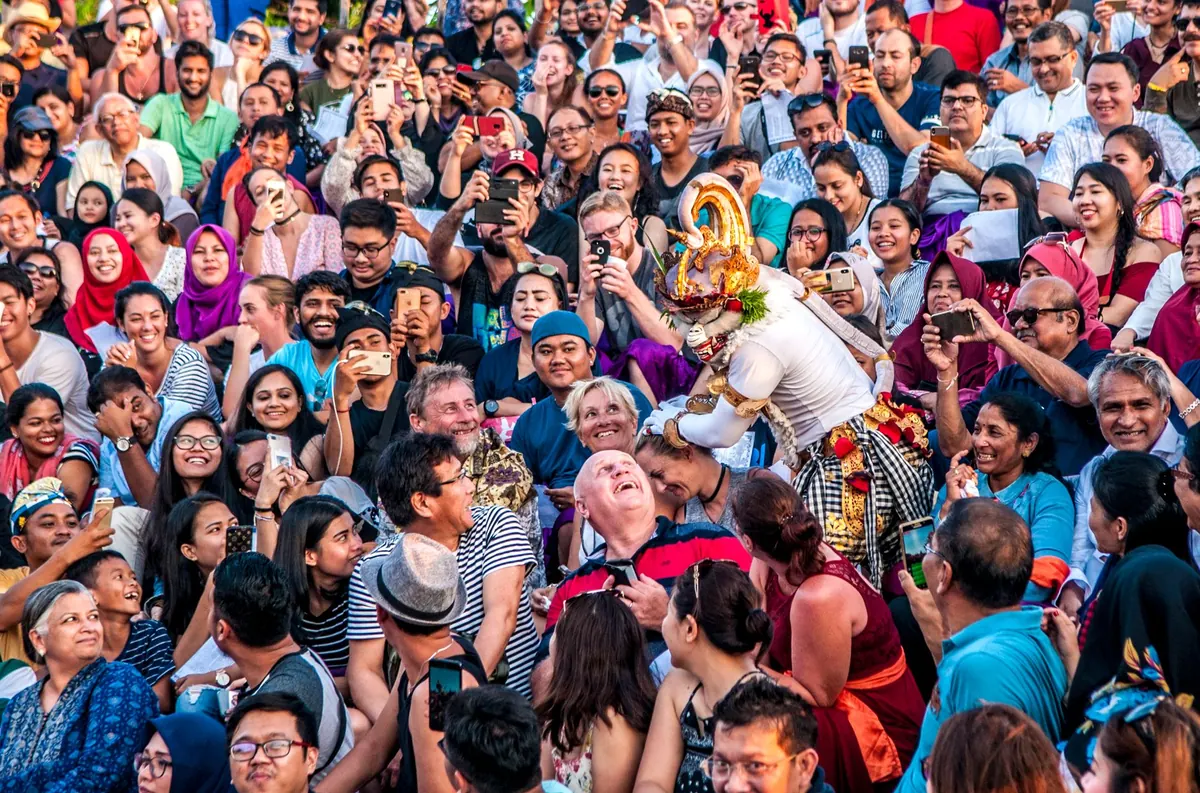
Photo: surya wibisono / Pexels