The wind decides everything on a coastal sunset. It chooses where you sit, what you can eat with your fingers, and how long you linger once the light has gone. Most failed sunset picnics are not ruined by the view. They are ruined by a plate of crisps travelling down the beach and a shivering retreat to the car ten minutes after the sun dropped. This checklist is built around that reality: pack for a breeze, plan for the cool hour afterwards, and the evening looks after itself.
Read the Wind Before You Choose the Spot
Check the forecast the morning of, not the week before, and look at two numbers rather than one: the average speed and the gusts. A steady twelve kilometres an hour is pleasant. The same average with gusts double that will lift paper napkins, capsize plastic cups and sand your sandwich.
Direction matters as much as strength. An onshore wind carries salt spray and cool air off the water; an offshore wind feels drier and milder at your back but pushes anything loose straight out to sea, where you cannot chase it. On many Mediterranean islands the afternoon breeze builds through the middle of the day and eases around dusk, which is why a beach that felt hostile at four o'clock can be calm by seven. On other coasts it does the opposite. Watch what the water does for five minutes before you commit.
Then find your lee. The sheltered side of a rock outcrop, a dune grass bank, a low harbour wall or the back of a beach café all break wind for the first metre or so above the ground — which is exactly where you will be sitting. Two warnings: those spots are the ones everyone else wants, so arrive early, and a wall that has held the sun all afternoon will still be radiating warmth an hour after sunset. That is a gift on a cold evening.
Warmth Is the Half Nobody Packs For
The sun sets, the light goes, and the temperature follows within twenty minutes. Wind makes that drop feel sharper than the thermometer suggests. Pack as though the evening will be several degrees cooler than the daytime high, and you will be right more often than not.
Layers beat one thick jacket: a base layer, a fleece or jumper, and a thin windproof shell that lives in the bag until needed. Bring a second pair of socks. Cold feet end picnics earlier than cold shoulders, and dry socks in a sealed bag cost you almost nothing in weight. A wool blanket is worth more than three thin cotton ones, and it does not matter if it gets slightly damp. For the ground, choose a mat or blanket with a waterproof backing, or lay a tarpaulin underneath — sand holds moisture, and a damp seat chills you from below.
One thermos of something hot, poured at the very end of the evening, will do more for morale than any extra course of food. So will a hat, even in summer.
Food That Can Take a Gust
Wind changes what works. Loose salad leaves, thin slices of cured meat, open bowls of olives and anything in a flimsy paper wrapper are all liabilities. Build the menu around food with structure and weight.
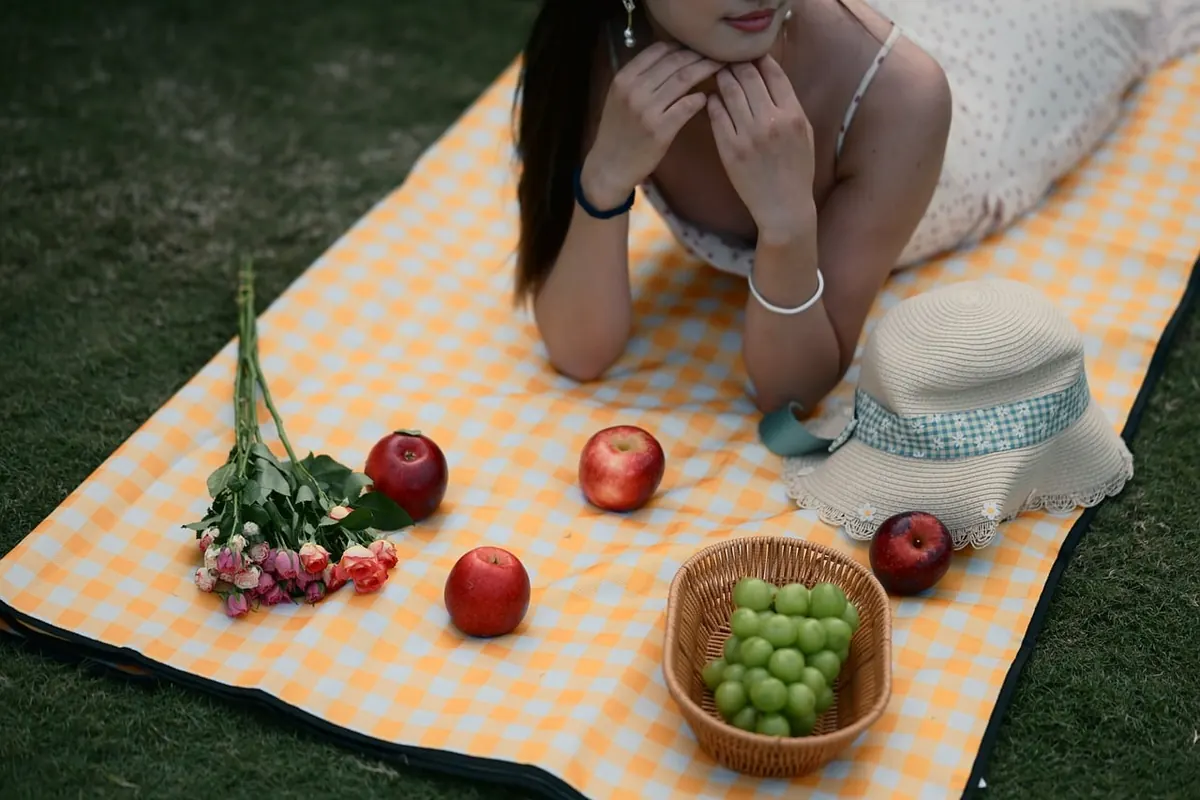
Focaccia, pita, thick-cut bread and pressed sandwiches hold together. A frittata or tortilla, sliced at home and carried in a lidded box, is close to the perfect picnic food. Hard cheese, whole fruit with skin — grapes, apples, peaches — nuts, cherry tomatoes still on the vine, and a jar of something oily with a screw lid all behave. Cut and dress everything in your own kitchen, where there is no wind. Bring one good knife and a small board if you plan to cut anything on site.
For drinks, skip stemmed glasses and open bottles. A screw-cap bottle, a flask, or stemless cups with weighted bases survive a gust; anything tall and light does not. Keep drinks in the bag until the moment you pour them, and pour low, close to the ground.
The Packing List
Ground and anchors
- Waterproof-backed mat or blanket, plus a spare throw for shoulders.
- Four weights — filled sandbags, heavy stones collected on site, or full water bottles — for the corners.
- Binder clips or laundry pegs to hold the blanket edge to a bag handle.
- Low tray or shallow box to carry cups; things on the ground stay on the ground.
Food and drink kit
- Lidded containers instead of open bowls. An empty one, filled with sand, becomes a paperweight.
- Cloth napkins that can be tucked under a plate rather than paper ones that fly.
- Thermos, screw-cap bottle, bottle opener, small knife and board.
- Cloth or mesh food cover if there are gulls about; they are bolder than you expect.
Small things that rescue evenings
- Headlamp or small torch for the walk back, plus a charged phone.
- Two rubbish bags — one for recycling, one for everything else.
- Wet wipes or a small cloth, a hand brush for crumbs, and a spare layer in a dry bag.
- Basic first aid: plasters, antiseptic wipe, and anything personal you take regularly.
Set Up in This Order
- Check the tide line and confirm how far the water will come in during the hours you plan to stay. Sit above the debris line left by the last high tide.
- Lay the ground layer and weight the upwind corners first, before you unpack anything.
- Sit with your back to the wind and your face to the view — not the other way round.
- Keep food closed until you eat, then close it again immediately. Serve in small rounds rather than laying everything out at once.
- Put on your extra layer before you feel cold, not after. It is easier to stay warm than to get warm.
Waste, Tides and the Walk Back
Take everything out with you, including fruit peel, nut shells and crumbs. Coastal scrub and dry sand break down organic waste slowly, and food scraps pull animals towards paths and nesting areas where they do real damage. Glass is a poor choice on any beach; it breaks in transit and stays invisible in sand. If you want a fire, check local rules first — on many islands and in many protected coastal areas it is prohibited outright, and dry grass and wind make the risk obvious.
Leave before you need the torch, if you can. The last stretch of a cliff path or a rocky shore is far easier in half-light than in full dark, and the twenty minutes after sunset are usually the most beautiful part of the evening anyway. Bag up, shake out the blanket away from where you sat, and check the ground twice — once for rubbish, once for anything you put down and forgot.
The Five-Minute Check Before You Lock the Door
Wind forecast and gusts, not just temperature. One extra layer and one extra pair of socks per person. A weighted ground layer. Food that holds its shape and containers that close. A headlamp and a rubbish bag. And a departure time that gets you back up the path while there is still light in the sky. Get those six things right and the wind stops being the enemy of the evening — it becomes the reason the light is so good.
Photo: em0rix / Pixabay